Exploration Report
Visitors should instantly grasp the value of discovering new hobbies, feel excited to take the quiz, and complete the discovery flow with a clear next step, whether that's exploring a specific hobby or sharing their results.
Top Findings
-
High
Comprehension. The design intent assumes visitors will 'instantly grasp the value of discovering new hobbies,' but 7 of 8 sessions show users immediately confused by 'AI memory' terminology without plain-language explanation. Users across archetypes (support_seeker, form_avoider, cautious_novice, mobile_native, social_validator, impatient_skipper) encountered the primary CTA as a cognitive barrier rather than an invitation. The 'Paste Memory' concept, central to the experience, was interpreted as requiring prior AI tool knowledge, creating privacy anxiety (cautious_novice: 'Paste Memory terminology without explanation triggered privacy anxiety'), and causing immediate paralysis (support_seeker: 'The novelty of AI memory created immediate uncertainty and halted progress'). The design's core value proposition is obscured by its own entry mechanism.
-
High
Friction. The design intent promises a 'clear next step' and 'discovery flow,' but the Explore path, presented as the lower-friction alternative, functionally failed for 3 of 4 users who attempted it. The cautious_novice encountered a perpetual 'Loading...' state with six unlabeled slider endpoints ('no visible error handling or timeout messaging when results failed to load'); the confident_scanner encountered a blank/stalled explore page with 'no loading indicators or progress feedback during the 10-minute wait'; the form_avoider found the explore link 'either led back to same requirement or failed to provide the expected simple browsing experience.' The mobile_native also selected Explore but 'spent the entire 10-minute session on this single page, suggesting she either encountered a loading issue, got stuck.' Only the social_validator and second support_seeker appear to have landed on functional explore pages, yet both timed out without progression. The dual-path architecture exists in UI but not in reliable implementation.
-
High
Trust. The design intent assumes excitement will drive quiz completion, but observed behavior shows trust-building prerequisites were systematically unmet. The site lacks social proof, user counts, or community activity despite targeting hobby discovery, an inherently social domain. The social_validator explicitly needed 'clear indication of how many hobbies are listed, social proof, or established user base to validate the site's legitimacy'; the mobile_native found 'no visible community content, reviews, or social proof'; the impatient_skipper noted 'no social proof, testimonials, or usage statistics visible to validate the tool's value.' The .pages.dev domain compounded distrust (support_seeker: 'domain and novel concept reduce trust due to unfamiliarity'). The 'how AI sees you in memory' phrasing triggered surveillance concerns (cautious_novice: 'cryptic phrasing raised surveillance concerns') rather than curiosity. Trust scores averaged 0.36 across all sessions, well below engagement thresholds needed for conversion.
Aggregate Affect
Frustration exits: 0 of 8 sessions
Common Friction Points
support_seeker 10
- 10-minute timeout suggests paralysis from uncertainty rather than active exploration
- Entire interface centers on an action the persona finds risky and poorly defined
- Immediate request for unfamiliar data input without explanation or trust-building
- No clear indication of how long the process would take or what commitment was required
- No traditional browse-first, commit-later pathway prominently offered
- No visible preview of what output or value the user receives
- Technical terminology ('AI memory data') lacks plain-language clarification
- The novelty of 'AI memory' created immediate uncertainty and halted progress
- The persona's need to fully understand before acting prevented any forward movement
- The session timed out, suggesting the reading/understanding phase exceeded reasonable duration
cautious_novice 7
- Complete session abandonment due to technical failure after 10 minutes of waiting
- Immediate ambiguity: 'paste memory' terminology without explanation triggered privacy anxiety
- Lack of loading feedback or progress indicator during extended wait created mounting uncertainty
- No alternative paths offered when primary functionality broke
- No default 'safe' state or recommended starting point for cautious users
- No visible error handling or timeout messaging when results failed to load
- Six unlabeled slider endpoints forced guesswork about what adjusting values would do
form_avoider 5
- Explore link either led back to same requirement or failed to provide the expected simple browsing experience
- Immediate confrontation with 'paste AI memory' requirement without plain-language explanation of what this means or why it's needed
- Lack of clear, conventional homepage layout with familiar elements like categories, search, or featured content
- Session timeout after prolonged struggle suggests user was unable to resolve initial confusion despite extended effort
- Technical jargon ('AI memory', 'how AI sees you') created immediate cognitive barrier for low-education user
impatient_skipper 5
- Forced to complete steps in another tool before this site becomes usable
- No way to explore or preview functionality without first obtaining and pasting external content
- Single-entry-point design leaves no fallback for users who don't have the prerequisite material
- Unfamiliar 'AI memory' terminology creates immediate confusion without explanation
- Yellow button labeled 'Generate Map' is actionable before text is entered, suggesting potential error risk
social_validator 5
- Minimal homepage design withholding information that the user needed to evaluate trustworthiness and relevance
- No clear indication of how many hobbies are listed, social proof, or established user base to validate the site's legitimacy
- Requires interaction with an external AI provider before seeing any actual hobby content
- Session timeout after 10 minutes of observation suggests the user was stuck in uncertainty without a clear path forward
- Unfamiliar 'paste memory' / 'AI memory' terminology with no immediate plain-language explanation or examples
mobile_native 4
- Explore option is visually deprioritized compared to the main CTA
- No immediate social features or dynamic content visible to satisfy extraverted curiosity
- Single-page session with no progression suggests possible technical failure or lack of engaging interactive elements
- Uncertainty about what 'AI memory' means and whether prior AI tool usage is required
confident_scanner 3
- Explore page appears to have stalled or failed to deliver content, leaving the user with nowhere to go after the initial navigation
- Lack of alternative pathways or fallback content when the primary exploration feature seems non-functional
- No loading indicators or progress feedback during the 10-minute wait, violating expectations for a dynamic, stimulating interface
Trust Signals
Positive 19
- 'Explore' option provided lower-commitment alternative to data-sharing feature
- 'How to get your memory' section indicates some guidance exists
- Clean layout suggests legitimate, well-maintained site
- Clean, minimal design initially signals professionalism and modernity (weak due to subsequent failure)
- Clean, uncluttered minimal design suggests legitimacy
- Clean, uncluttered page design avoided overwhelming visual noise
- Clean, uncluttered visual design reduced cognitive overload
- Clean, uncluttered visual design suggests professionalism
- Minimal data requests compared to typical signup flows
- Modern, approachable design aesthetic increases initial trust
- No ads or aggressive monetization visible
- No immediate registration gate or forced account creation
- Presence of an 'Explore' link as conventional, lower-risk alternative to the novel paste feature
- Step-by-step instructions in yellow box provided structured guidance matching preference
- Traditional instructional format felt familiar and predictable
- Presence of 'Explore' alternative suggested some awareness of user preference for simpler paths
- Presence of an alternative entry point (Explore) shows some user consideration
- Single-field interface implies simplicity and limited exposure
- Top-right 'Explore' link follows conventional navigation patterns, suggesting familiarity
Negative 15
- Absence of explanatory copy, testimonials, or social proof weakens credibility for a skeptic
- Cryptic 'AI sees you in memory' phrasing raised surveillance concerns
- Domain (.pages.dev) and novel concept reduce trust due to unfamiliarity
- Lack of social proof, user counts, or community activity decreases trust for an early adopter seeking validation
- 'AI memory' terminology felt novel and unexplained, triggering caution
- Lack of testimonials, user counts, or popularity indicators that this highly social-influence-susceptible user needs
- No visible authority endorsements or established-brand recognition
- Novel concept without social proof frames the site as untested rather than proven
- Unclear what the site ultimately does or what value it provides
- No privacy policy, terms, or data usage explanation accessible from main flow
- No security indicators or data usage explanation for pasted content
- No visible company information, about page, or contact details
- Requirement to use external AI tools and paste unfamiliar content feels sketchy
- Technical failure to load content undermined reliability perception
- Technical terminology and unfamiliar interaction model signaled this site is not designed for users like this persona
Key Moments
cautious_novice
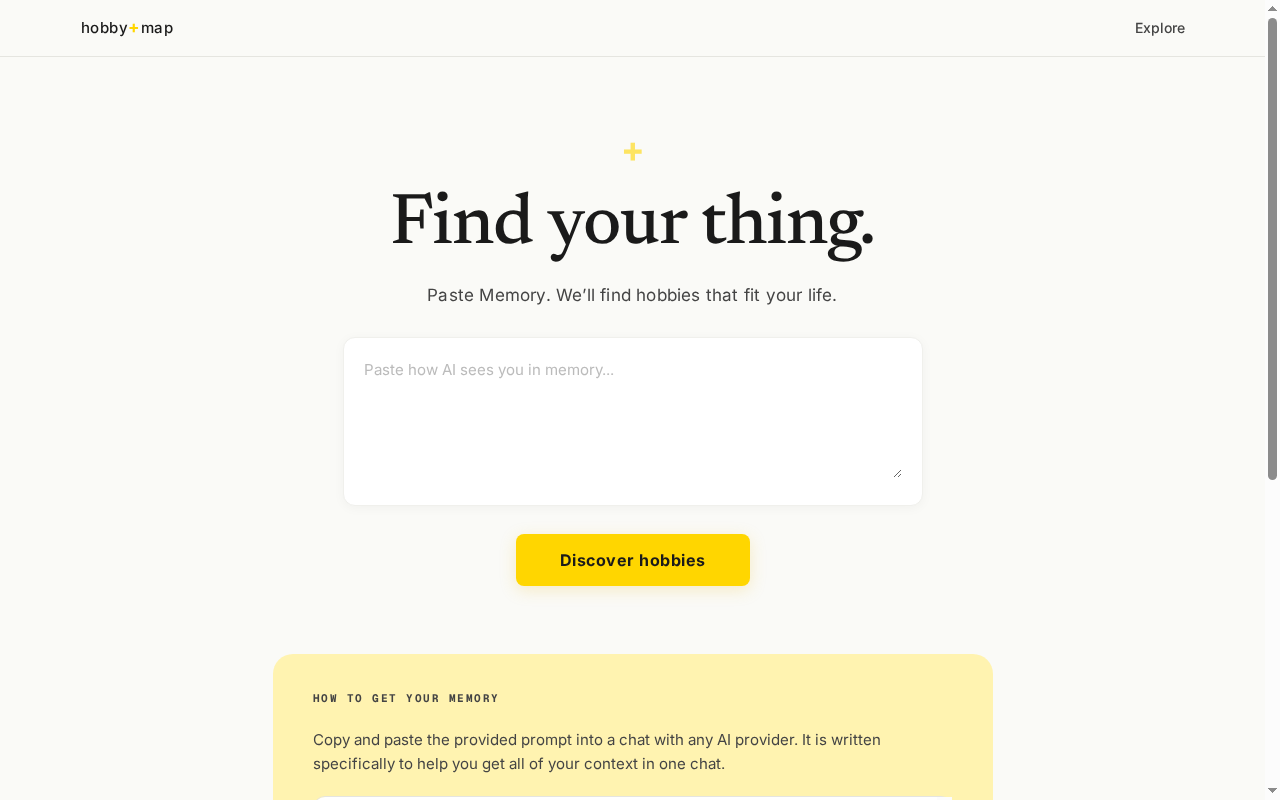
Step 1 · first step
ses_01KQMX5E06F571ZGG1527S6GKK
“I'm worried about what 'AI sees you in memory' means and whether I'd be sharing private information. I don't want to paste anything without understanding where…”
confident_scanner
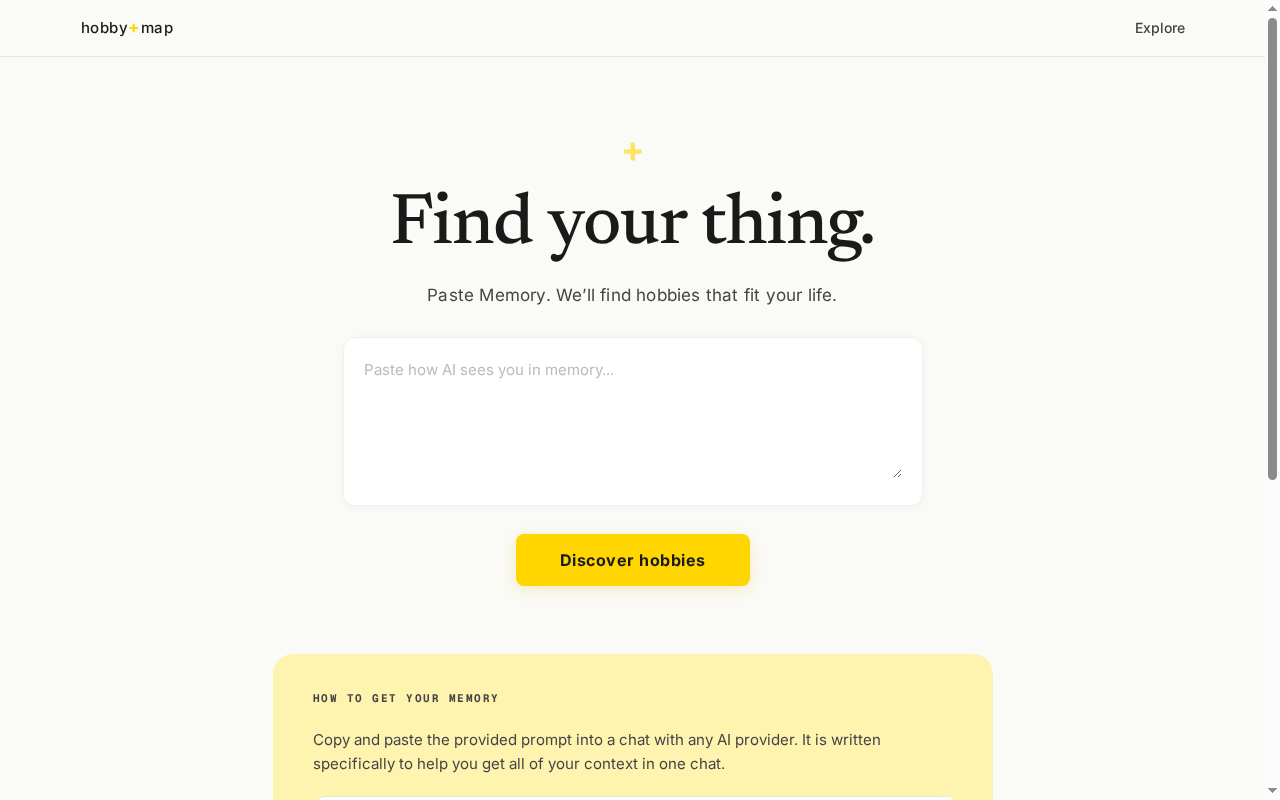
Step 1 · first step
ses_01KQMX5E06DR4HRMDVWDHTTSX3
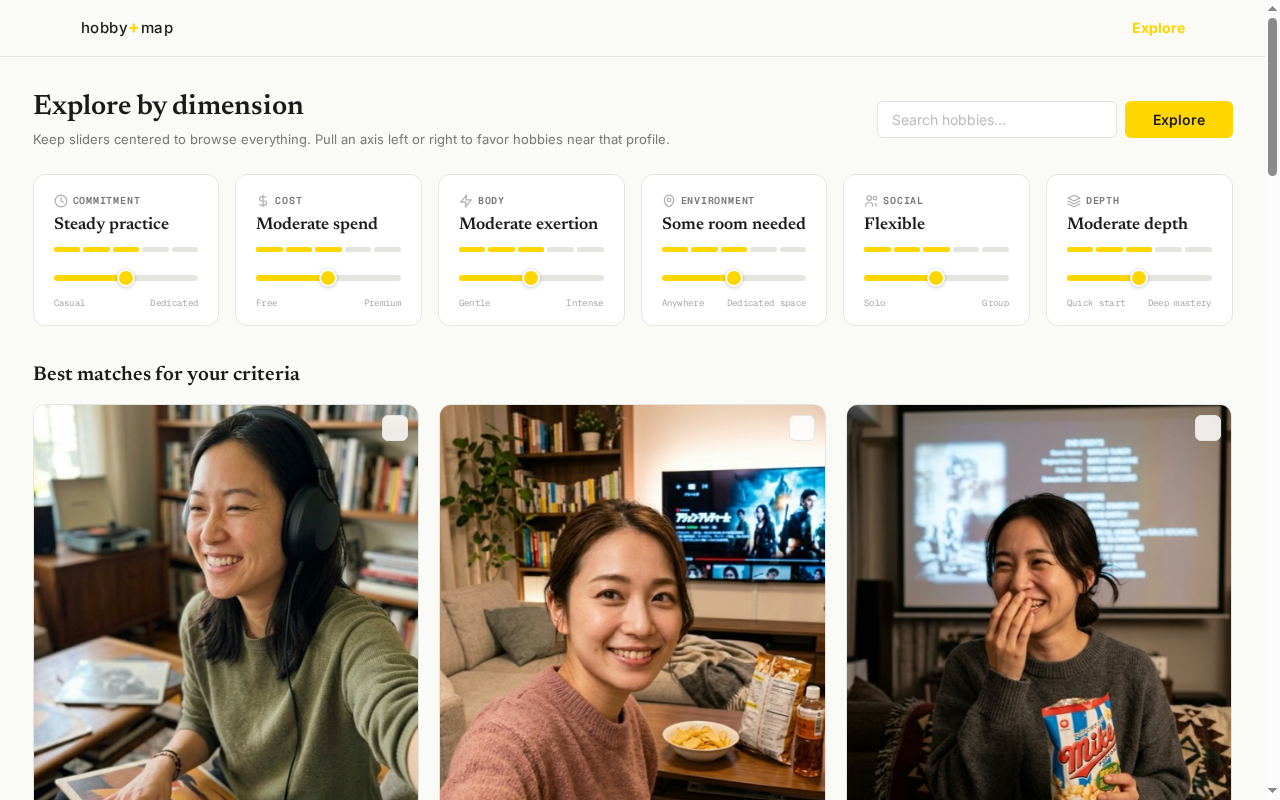
Step 2 · error
ses_01KQMX5E06DR4HRMDVWDHTTSX3
form_avoider
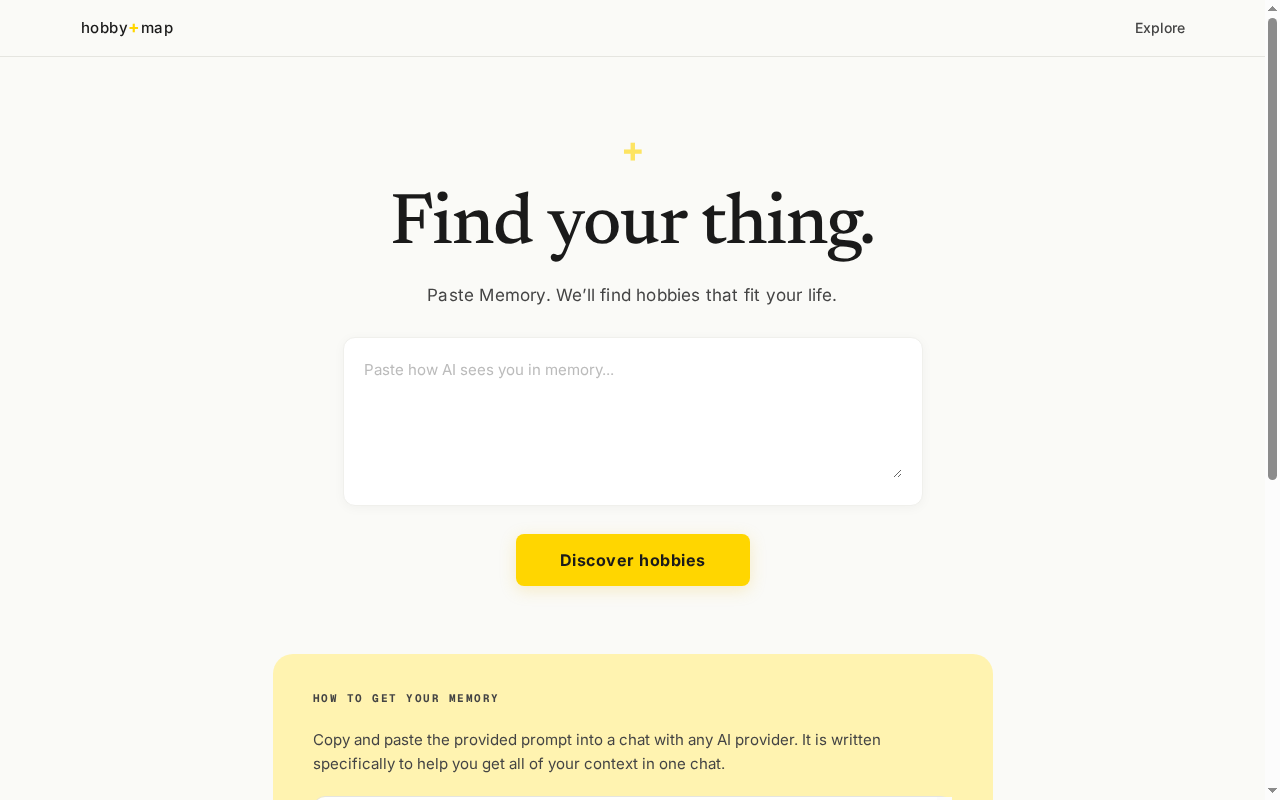
Step 1 · first step
ses_01KQMX5E06K3QA66X5BYNTKPTY
“This whole 'paste memory' thing seems like too much work and too techy for me. I don't even know what 'how AI sees you in memory' means. Hopefully Explore is s…”
impatient_skipper
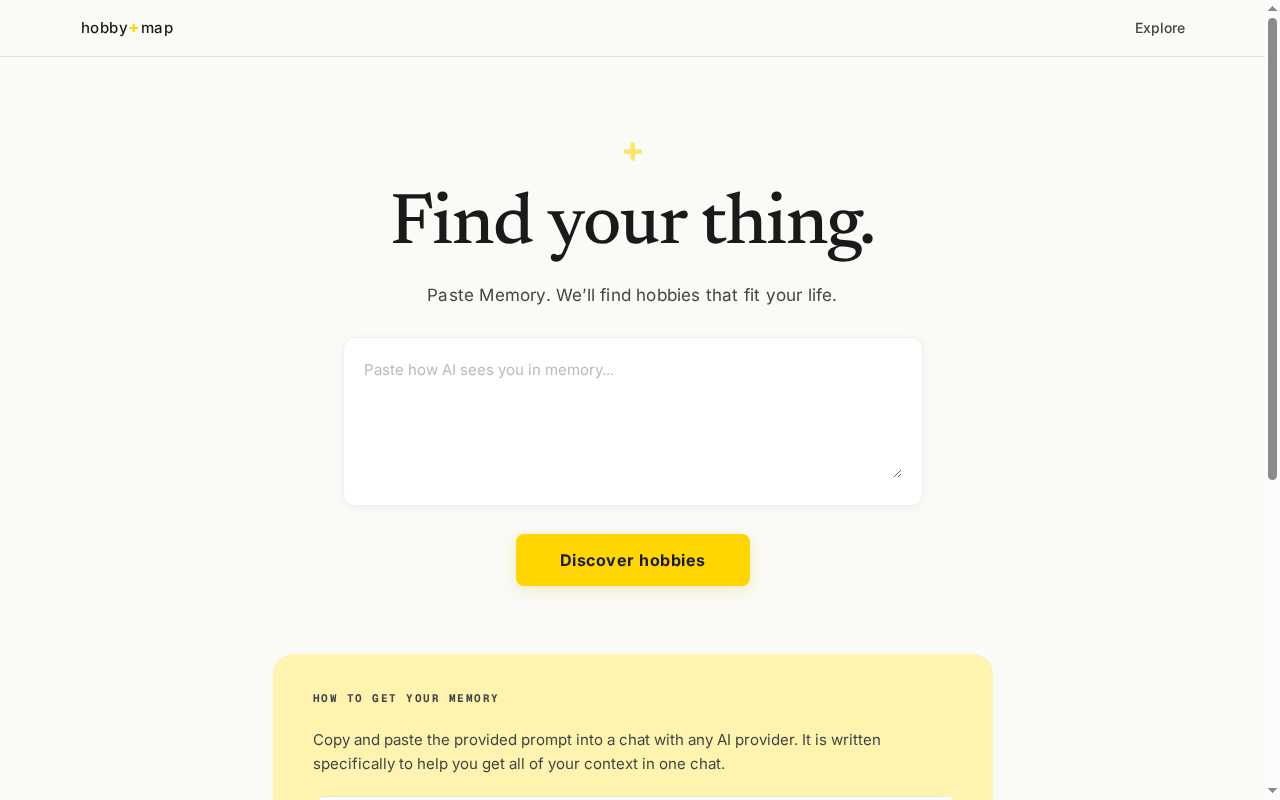
Step 1 · first step
ses_01KQMX5E06PMWTVNBBNAYK0EKX
“I don't understand what 'AI memory' is or where to get it, and I'm not comfortable pasting something I don't understand. The 'how to get your memory' section b…”
mobile_native
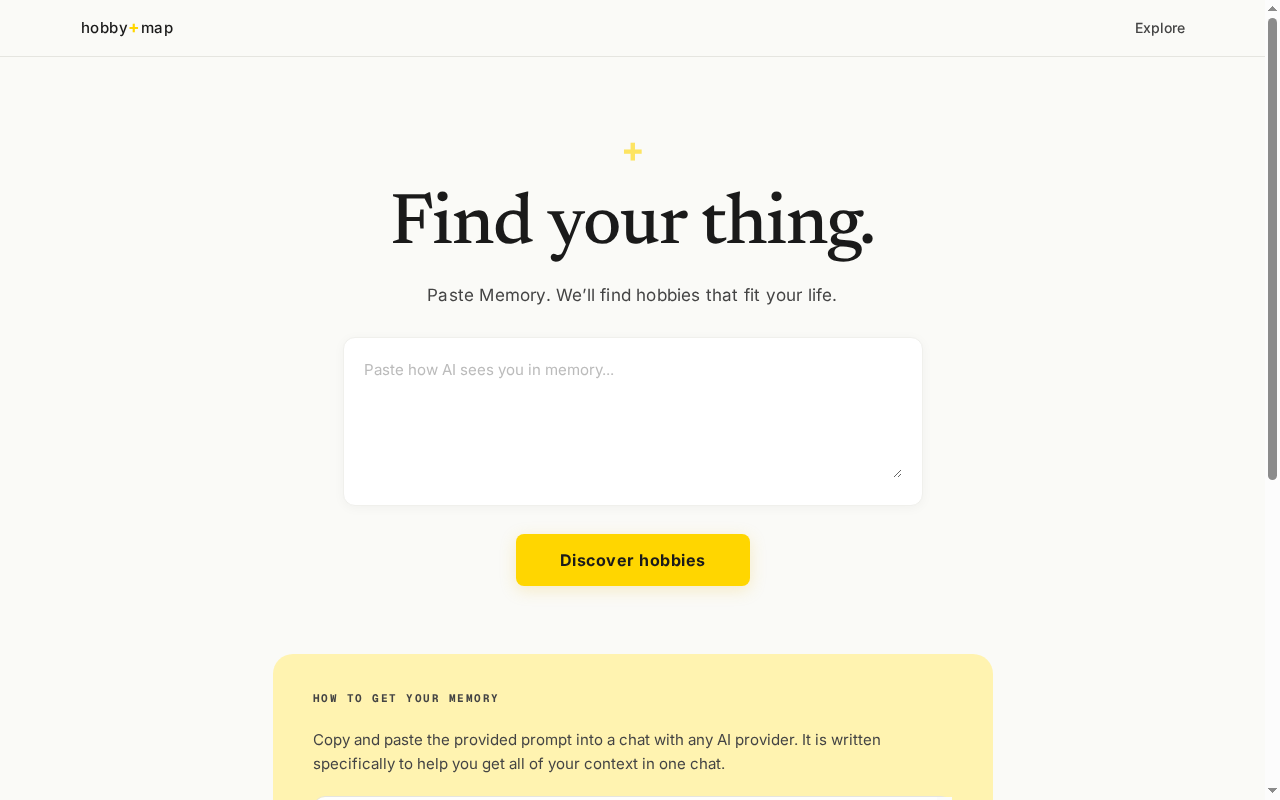
Step 1 · first step
ses_01KQMX5E065A0Y28BQ0Y9JK7NT
“Not sure what 'memory' means in this context or if I need to have used AI before. Explore might help me understand without that barrier.”
social_validator
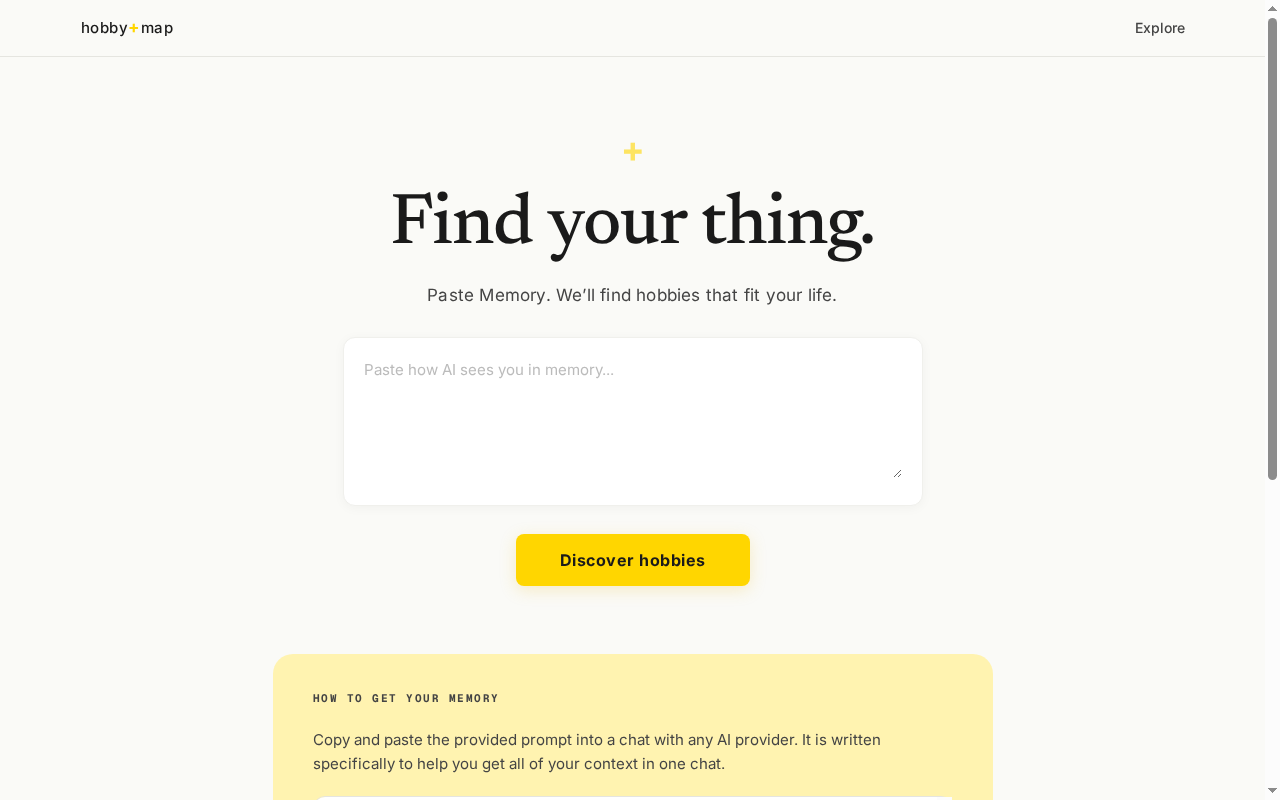
Step 1 · first step
ses_01KQMX5E06XV113E67C2KGP934
“I'm not sure what 'AI memory' means or how to get it. The instructions mention copying a prompt to an AI provider, which sounds complicated. I want to see what…”
support_seeker
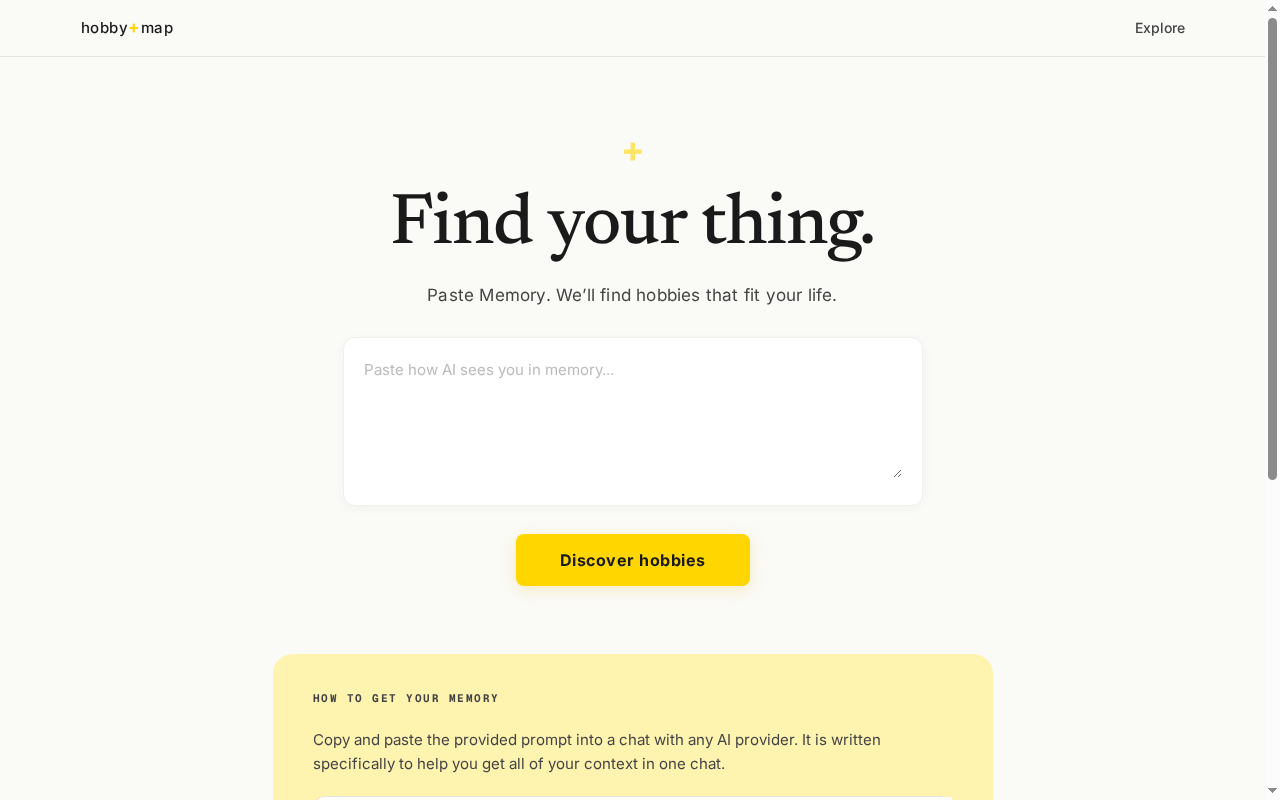
Step 1 · first step
ses_01KQMX5E06WCAT2THFSV6MSEMZ
“I'm not sure what 'Paste how AI sees you in memory' means exactly. It sounds technical and I'm hesitant to paste anything without understanding what data I'd b…”
Step 1 · first step
ses_01KQMX5E06YEYZ68X02BEZKNPC
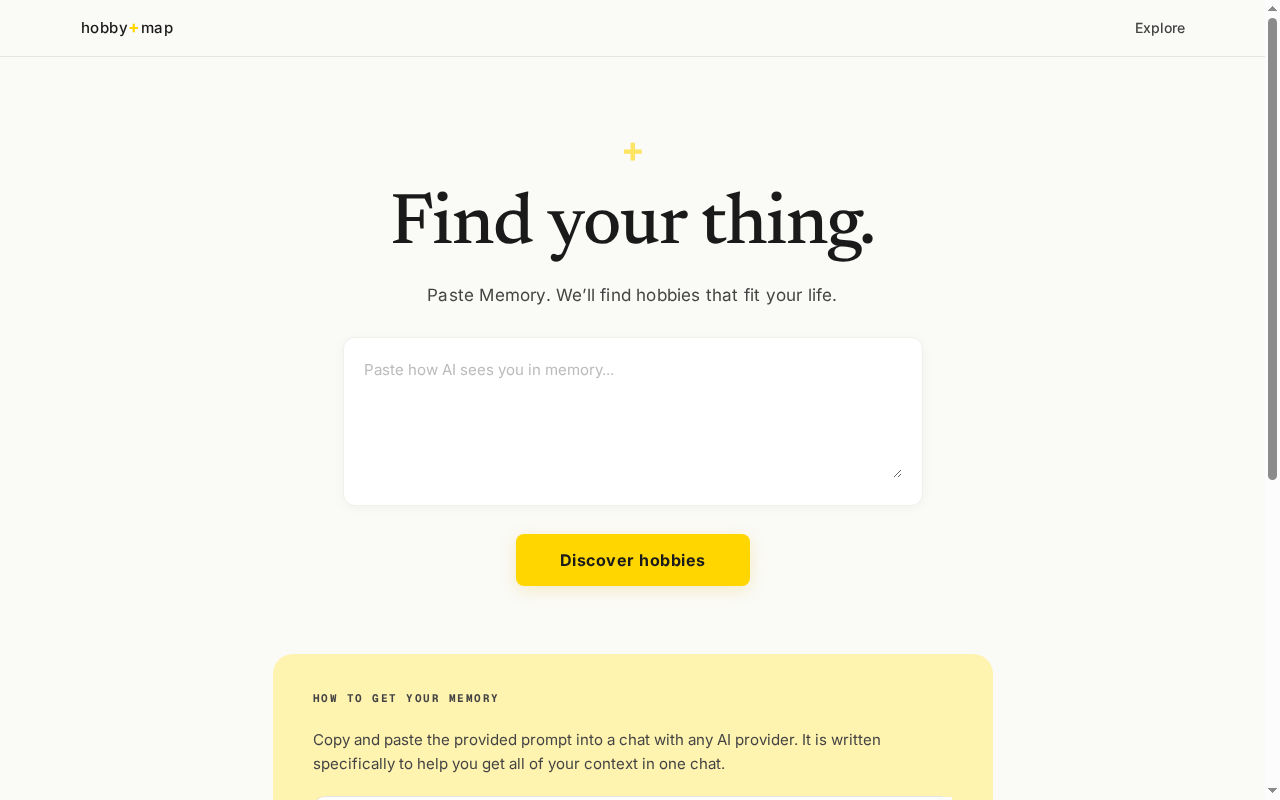
“I'm not sure what this AI memory is or how to get it. The instructions seem important.”
Archetype Breakdowns
cautious_novice 1 session Frustration 52% Engagement 28% Trust 28%
Findings
Homepage offered two paths: an opaque 'Paste Memory' feature with unclear data handling and a seemingly safer 'Explore' alternative. Explore page presented six dual-axis filter sliders with abstract labels (cost, social, physical, creative, time, complexity) defaulting to middle values. Results never loaded; the page remained on 'Loading…' for the entire session duration. No explanatory text clarified what the sliders controlled or how they affected results. Minimal visual hierarchy or guidance for a first-time visitor; the interface assumed prior understanding of the service. Dark theme with clean layout but unconventional vocabulary ('AI sees you in memory') created initial distrust.
Friction
Immediate ambiguity: 'Paste Memory' terminology without explanation triggered privacy anxiety. Lack of loading feedback or progress indicator during extended wait created mounting uncertainty. Six unlabeled slider endpoints forced guesswork about what adjusting values would do. No default 'safe' state or recommended starting point for cautious users. No visible error handling or timeout messaging when results failed to load. Complete session abandonment due to technical failure after 10 minutes of waiting. No alternative paths offered when primary functionality broke.
confident_scanner 1 session Frustration 35% Engagement 25% Trust 40%
Findings
Landing page is extremely minimal with only a single call-to-action, which feels clean but potentially underwhelming for an information-seeking persona. The '#explore' route change suggests a single-page application structure, but no subsequent page content is reflected in the trace. The 10-minute timeout with no additional steps implies the explore page may have loaded blank, broken, or failed to present actionable hobby content. No visible social features, reviews, community content, or interactive elements detected in the brief interaction window.
Friction
Explore page appears to have stalled or failed to deliver content, leaving the user with nowhere to go after the initial navigation. No loading indicators or progress feedback during the 10-minute wait, violating expectations for a dynamic, stimulating interface. Lack of alternative pathways or fallback content when the primary exploration feature seems non-functional.
form_avoider 1 session Frustration 65% Engagement 25% Trust 30%
Findings
Site homepage prominently features an unfamiliar 'AI memory' input requirement as the primary interaction. An 'Explore' alternative navigation option exists but its accessibility or functionality was unclear or ineffective. The landing page language uses technical terminology ('how AI sees you in memory') that assumes user familiarity with AI concepts. No obvious traditional browsing or category-based entry point was apparent without first engaging with the AI memory feature.
Friction
Immediate confrontation with 'paste AI memory' requirement without plain-language explanation of what this means or why it's needed. Technical jargon ('AI memory', 'how AI sees you') created immediate cognitive barrier for low-education user. Lack of clear, conventional homepage layout with familiar elements like categories, search, or featured content. Explore link either led back to same requirement or failed to provide the expected simple browsing experience. Session timeout after prolonged struggle suggests user was unable to resolve initial confusion despite extended effort.
impatient_skipper 1 session Frustration 50% Engagement 25% Trust 30%
Findings
The site demands 'AI memory' paste as its sole entry point with no alternative onboarding path. A 'how to get your memory' section exists but redirects to external AI tools, adding perceived complexity. Extremely minimal interface (single textbox + yellow button) offers no contextual examples or previews of output. No social proof, testimonials, or usage statistics visible to validate the tool's value. The workflow assumes prior knowledge of AI memory exports from other platforms.
Friction
Unfamiliar 'AI memory' terminology creates immediate confusion without explanation. Forced to complete steps in another tool before this site becomes usable. No way to explore or preview functionality without first obtaining and pasting external content. Single-entry-point design leaves no fallback for users who don't have the prerequisite material. Yellow button labeled 'Generate Map' is actionable before text is entered, suggesting potential error risk.
mobile_native 1 session Frustration 35% Engagement 45% Trust 50%
Findings
Landing page has a stark binary choice: paste AI memory or click Explore. Design is clean and modern but potentially too minimal for an extraverted user seeking social stimulation. The 'memory' concept is unclear and creates an onboarding barrier for new users. No visible community content, reviews, or social proof on the initial view. Explore link is positioned as secondary (top right) rather than primary.
Friction
Uncertainty about what 'AI memory' means and whether prior AI tool usage is required. Explore option is visually deprioritized compared to the main CTA. Single-page session with no progression suggests possible technical failure or lack of engaging interactive elements. No immediate social features or dynamic content visible to satisfy extraverted curiosity.
social_validator 1 session Frustration 45% Engagement 25% Trust 35%
Findings
The 'Paste Memory' concept using 'AI memory' is novel and unfamiliar, creating immediate cognitive friction for a user who prefers established patterns. The homepage is minimal to the point of being insufficiently informative for someone who needs clear guidance and comprehensive upfront explanation. The site requires an action (copying a prompt to an external AI provider) before revealing content, which conflicts with the user's preference to evaluate offerings before engagement. The 'Explore' link was perceived as a reassuring, low-risk alternative to the unfamiliar paste functionality.
Friction
Unfamiliar 'Paste Memory' / 'AI memory' terminology with no immediate plain-language explanation or examples. Requires interaction with an external AI provider before seeing any actual hobby content. Minimal homepage design withholding information that the user needed to evaluate trustworthiness and relevance. No clear indication of how many hobbies are listed, social proof, or established user base to validate the site's legitimacy. Session timeout after 10 minutes of observation suggests the user was stuck in uncertainty without a clear path forward.
support_seeker 2 sessions Frustration 35% Engagement 32.5% Trust 37.5%
Findings
The site features a prominent yellow instruction box explaining a multi-step process. The site involves an unfamiliar 'AI memory' concept that requires explanation. The interface presents information in a structured, step-by-step format that appeals to the persona's preference for guidance. The single-page nature of the visit suggests either a landing page or a bottleneck in the user flow. Clean, simple page layout with minimal clutter. Unconventional core mechanic requiring users to paste 'AI memory data'. Presence of an 'Explore' alternative suggesting a non-committal entry path. Vague, technical language ('how AI sees you in memory') without explanatory context. No visible traditional navigation or categorical hobby browsing. Single-page design with no apparent hierarchy or step-by-step guidance.
Friction
The novelty of 'AI memory' created immediate uncertainty and halted progress. The persona's need to fully understand before acting prevented any forward movement. No clear indication of how long the process would take or what commitment was required. The session timed out, suggesting the reading/understanding phase exceeded reasonable duration. Immediate request for unfamiliar data input without explanation or trust-building. Technical terminology ('AI memory data') lacks plain-language clarification. No visible preview of what output or value the user receives. No traditional browse-first, commit-later pathway prominently offered. Entire interface centers on an action the persona finds risky and poorly defined. 10-minute timeout suggests paralysis from uncertainty rather than active exploration.
Gap Analysis
Identified Gaps
-
High Comprehension
The design intent assumes visitors will 'instantly grasp the value of discovering new hobbies,' but 7 of 8 sessions show users immediately confused by 'AI memory' terminology without plain-language explanation. Users across archetypes encountered the primary CTA as a cognitive barrier rather than an invitation. The 'Paste Memory' concept, central to the experience, was interpreted as requiring prior AI tool knowledge, creating privacy anxiety and causing immediate paralysis. The design's core value proposition is obscured by its own entry mechanism.
support_seeker, form_avoider, cautious_novice, mobile_native, social_validator, impatient_skipper
-
High Friction
The design intent promises a 'clear next step' and 'discovery flow,' but the Explore path, presented as the lower-friction alternative, functionally failed for 3 of 4 users who attempted it. The cautious_novice encountered a perpetual 'Loading...' state with six unlabeled slider endpoints; the confident_scanner encountered a blank/stalled explore page; the form_avoider found the explore link either led back to same requirement or failed to provide the expected simple browsing experience. The mobile_native also selected Explore but spent the entire 10-minute session on this single page. Only the social_validator and second support_seeker appear to have landed on functional explore pages, yet both timed out without progression. The dual-path architecture exists in UI but not in reliable implementation.
cautious_novice, confident_scanner, form_avoider, mobile_native, social_validator, support_seeker
-
High Trust
The design intent assumes excitement will drive quiz completion, but observed behavior shows trust-building prerequisites were systematically unmet. The site lacks social proof, user counts, or community activity despite targeting hobby discovery, an inherently social domain. The social_validator explicitly needed clear indication of social proof; the mobile_native found no visible community content, reviews, or social proof; the impatient_skipper noted no social proof, testimonials, or usage statistics visible. The .pages.dev domain compounded distrust. The 'how AI sees you in memory' phrasing triggered surveillance concerns rather than curiosity. Trust scores averaged 0.36 across all sessions, well below engagement thresholds needed for conversion.
social_validator, mobile_native, impatient_skipper, support_seeker, cautious_novice
-
High Navigation
The design intent emphasizes a 'clear next step, whether that's exploring a specific hobby or sharing their results,' but the actual flow forces a single entry point that conflicts with multiple mental models. The impatient_skipper was forced to complete steps in another tool before this site becomes usable; the social_validator noted the site requires interaction with an external AI provider before seeing any actual hobby content; the support_seeker found no traditional browse-first, commit-later pathway prominently offered. The 'Explore' alternative, while visually present in some sessions, was either deprioritized, dysfunctional, or led to a technically broken experience. Users expecting conventional category browsing found no familiar waypoints. The architecture assumes AI-memory-paste as the universal on-ramp, but 7 of 8 users rejected or failed at this entry point.
impatient_skipper, social_validator, support_seeker, mobile_native, form_avoider, cautious_novice, confident_scanner
-
Medium Engagement
The design intent promises excitement and completion, yet the average engagement score of 0.30 indicates systemic failure to motivate progression. Five of eight sessions resulted in complete timeouts with zero meaningful progression; the remaining three show only minimal interaction. The confident_scanner found no visible social features, reviews, community content, or interactive elements. The mobile_native encountered no immediate social features or dynamic content visible to satisfy extraverted curiosity. The homepage's minimalism, intended as clean, translated as empty: minimal homepage design withholding information that the user needed to evaluate trustworthiness and relevance. The single-field input with a yellow button offered no visible preview of what output or value the user receives, failing to create anticipation that would drive completion. Users could not visualize the reward, so they did not act.
confident_scanner, mobile_native, social_validator, support_seeker, cautious_novice, form_avoider
-
Medium Accessibility
The design intent of 'instantly grasp value' and completing the 'discovery flow' is inaccessible to users with lower technical literacy or AI familiarity. The form_avoider, explicitly a low-education user, found that technical jargon created immediate cognitive barrier. Six unlabeled slider endpoints forced guesswork about what adjusting values would do (cautious_novice). The 'AI memory' concept assumed knowledge of AI tool exports that most users lack; even technical archetypes (mobile_native, confident_scanner) were confused. The interface contains no progressive disclosure, no default safe state or recommended starting point for cautious users, and no alternative for users who don't have the prerequisite material. The design is built for AI-native early adopters but marketed to general hobby-seekers, creating a fundamental audience-product mismatch that blocks all but the most technologically sophisticated users.
form_avoider, cautious_novice, mobile_native, confident_scanner, impatient_skipper, social_validator
Recommendations
- Replace 'Paste AI Memory' as the primary CTA with a conventional 'Browse Hobbies' entry point; relegate AI-memory-paste to an optional 'Personalize with AI' secondary path that unlocks after users have experienced baseline value.
- Implement a functional, content-rich Explore page with actual hobby listings, categories, search, and featured content; add skeleton screens and error states with fallback content when loading fails.
- Add immediate value preview: show sample hobby cards, example outputs, or a 'See what you'll get' interaction before requiring any data input from users.
- Replace all 'AI memory' terminology with plain-language alternatives ('Your interests,' 'What you enjoy,' or explicit step-by-step explanations with examples); add contextual help tooltips for technical concepts.
- Introduce progressive onboarding: allow immediate browsing, then offer optional personalization via simple in-quiz questions, with AI-memory-paste as an advanced option for power users.
- Add comprehensive trust signals: hobby count, user testimonials, community activity feed, 'how it works' video, about page with team/company info, and visible privacy/data usage explanations.
- Fix technical reliability of the Explore path; add loading states, timeout handling with retry options, and graceful degradation to static content when dynamic features fail.
- Design for the 6 slider filters: add clear labels with plain-language explanations, default presets ('Beginner-friendly,' 'Social,' 'Low-cost'), and immediate visual feedback showing how adjustments affect results.
- Create archetype-specific landing variants or adaptive onboarding that detects user hesitation and offers guided paths matched to support-seeker, scanner, or validator preferences.
- Add social and interactive elements to satisfy engagement-oriented users: user-generated hobby reviews, 'trending now' section, ability to save/favorite without account creation, and shareable result previews.